Chains Patterns Collection
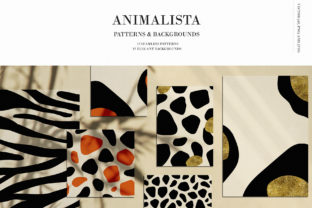
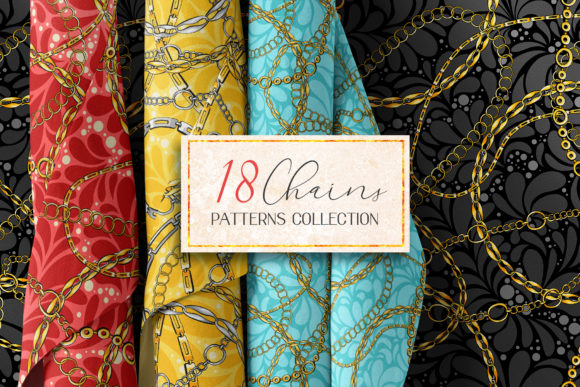
The Chains Patterns Collection isn’t just another set of repeatable motifs—it’s a deliberate fusion of nostalgic texture and contemporary utility. Inspired by the bold, unapologetic fashion language of the 1980s, this collection reinterprets chain-link aesthetics—not as literal hardware, but as expressive, hand-drawn visual language. Think golden and silver chains sketched with intentional imperfection: slight tapering, subtle weight shifts, organic line variation. Layered with baroque flourishes—scrollwork, fleur-de-lis accents, ornamental borders—and grounded with tactile animal print details (leopard spots rendered in ink-wash softness, zebra stripes with rhythmic spacing), each pattern balances opulence and wearability.
Why Seamless Chains Resonate Now
Seamless patterns are no longer niche tools reserved for textile mills or luxury wallpaper studios. They’re embedded in how creators work today: across platforms, scales, and mediums. A freelance surface designer drops a Chains Patterns Collection motif into a mockup for a client’s limited-edition tote bag line; an indie apparel brand overlays one onto a silk scarf design in Adobe Illustrator, then exports it directly to their print-on-demand partner; a small-batch ceramicist uses the same vector file to laser-etch chain motifs onto porcelain coasters. The demand isn’t for “more patterns”—it’s for patterns that behave predictably across contexts. That’s where the technical execution matters: 18 rigorously tested seamless repeats, delivered in editable EPS (for infinite scaling and color adjustments) and high-resolution JPEG (6000 × 6000 px, 300 dpi), means no pixelation on a billboard-sized fabric swatch or loss of fidelity when converting to embroidery stitch files.
From Runway Nostalgia to Real-World Relevance
The 80s revival isn’t about costume—it’s about confidence translated into form. Today’s reinterpretation leans less on shoulder pads and more on structural clarity, contrast, and layered symbolism. Chains, historically signifying connection, restraint, or strength, now carry new meaning: digital interconnectivity, personal boundaries, or even craft continuity (link-by-link, stitch-by-stitch). That resonance shows up in subtle ways. Interior designers use metallic chain motifs in upholstery fabrics to add quiet luxury without loud shine. Stationery brands apply baroque-chain hybrids to foil-stamped wedding invites—elegant but not fussy. Even educators developing visual literacy curricula reference these patterns to demonstrate rhythm, repetition, and cultural semiotics in accessible ways.
Practical Flexibility Built In
Each of the 18 patterns serves multiple roles—not as isolated assets, but as modular components. One motif might feature tightly coiled gold links ideal for narrow trims or ribbon designs; another uses spaced-out silver chains against a leopard ground, perfect for full-coverage fabric yardage. The baroque elements aren’t decorative afterthoughts—they’re calibrated to scale gracefully. A fleur-de-lis border works equally well as a subtle edge repeat on a notebook cover or enlarged as a focal panel on a jacket lining. Animal print details avoid photorealism; instead, they’re stylized with hand-drawn grain and irregular spotting—making them easier to recolor, layer, or mute for tonal variations. This level of intentionality saves time: no need to manually adjust tile alignment or rebuild motifs from scratch when adapting for different substrates.
Fabric Design Meets Modern Production Realities
Textile design workflows have shifted dramatically. Just five years ago, many independent makers relied on local printers with fixed color palettes and minimum order quantities. Today, global print-on-demand services, direct-to-fabric inkjet systems, and AI-assisted color matching mean designers need assets that are both expressive and production-ready. The Chains Patterns Collection meets that need precisely. Its 300 dpi resolution ensures crisp output on cotton poplin, viscose crepe, or performance knits—even at large repeats. The vector EPS files allow designers to isolate individual chain segments for custom placement (e.g., tracing a single bracelet link to use as a logo icon), adjust stroke weights for screen-printing constraints, or convert paths into SVG for web-based configurators. No raster degradation. No guesswork around bleed or seam allowances. Just precision, built-in.
More Than Aesthetic—A Workflow Anchor
For professionals juggling tight deadlines and cross-platform deliverables, consistency is currency. Using a unified pattern family like Chains Patterns Collection reduces cognitive load: when a brand’s capsule collection includes scarves, tote bags, and gift wrap, applying the same chain motif across all three creates instant cohesion—even if colors shift between items. That cohesion translates to customer recognition. It also streamlines feedback loops: a client reviewing a textile proposal can comment on tone or scale without questioning whether the underlying repeat logic holds up. And for educators or workshop leaders, the collection offers teachable moments—how baroque ornamentation affects optical density, how animal prints influence perceived warmth in a palette, how seamless tiling impacts drape and cut planning.
Evolving Beyond Trend, Into Tool
What separates enduring design resources from fleeting trend packs is adaptability over time. The Chains Patterns Collection avoids locking users into a single era’s interpretation. Yes, its roots are in 80s fashion—but its execution avoids caricature. There are no exaggerated chrome gradients or neon halos. Instead, there’s nuance: silver chains drawn with graphite-like texture, gold links shaded with warm mid-tones rather than flat metallic fills, baroque scrolls simplified to essential curves. That restraint allows the patterns to age well—and to hybridize. Pair one with a minimalist sans-serif typeface for a modern stationery line. Layer it under watercolor washes for artisanal greeting cards. Use the animal print variants as subtle background textures beneath bold typography in social media banners. The patterns don’t shout; they support.
Who Benefits—and How
- Freelance surface designers use the EPS files to build custom repeats for client briefs—swapping gold for rose gold, adjusting chain density for knit versus woven fabric, or embedding motifs into larger compositions.
- Small apparel brands apply the JPEGs directly to digital printing portals, confident that the 6000 × 6000 px resolution accommodates wide-format rolls without upscaling artifacts.
- Product developers test chain motifs on packaging prototypes, evaluating how metallic tones translate across matte vs. glossy finishes before committing to physical samples.
- Educators and students study the vector construction to understand anchor points, path direction, and tile boundaries—practical lessons in scalable design fundamentals.
- Hobbyists and makers import JPEGs into Cricut Design Space or Silhouette Studio for cutting metallic vinyl decals, or use them as references for hand-embroidery transfers.
This isn’t about replicating the past. It’s about equipping today’s creators with tools that honor historical texture while meeting current technical standards—without compromise. The Chains Patterns Collection delivers that balance: rich in reference, precise in execution, and quietly versatile in application. Whether you’re developing a signature textile line, refreshing a brand’s visual identity, or exploring pattern-making as a practice, these 18 seamless designs function as both inspiration and infrastructure—ready when you are.