Space Vector Patterns
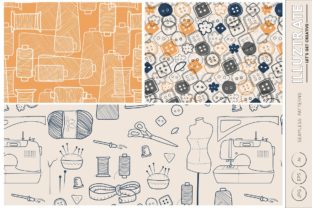
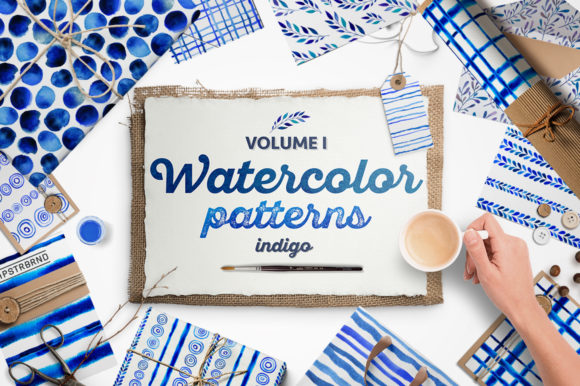
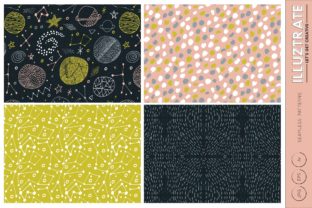
Space Vector Patterns is a curated collection of four original, seamless vector-based pattern designs intended for versatile digital and physical applications. Each pattern is delivered as a scalable vector file (AI and EPS formats), along with a 12×12 inch JPEG preview at 300 DPI. The package includes both the individual tile and the full pattern swatch, enabling users to adjust colors, scale, and spacing without loss of quality.
These patterns are built using vector geometry—lines, curves, and shapes defined mathematically rather than by pixels. As a result, they retain crisp clarity at any size, from business card backgrounds to large-format wall graphics. Their seamless nature means they repeat smoothly across surfaces, making them suitable for textile printing, packaging, stationery, app interfaces, phone case designs, and more.
Why Consider Space Vector Patterns?
Designers, small-business owners, and creative professionals often need repeatable, production-ready patterns that integrate efficiently into workflows. Space Vector Patterns addresses this need by offering ready-to-use assets that require minimal editing before deployment. Its appeal lies in practicality: it saves time on pattern creation while preserving flexibility in color and layout.
Users commonly seek such resources when launching product lines (e.g., fabric collections or branded merchandise), developing cohesive visual identities, or producing marketing collateral where consistency and scalability matter. Because the files are vector-based, they support precise alignment, CMYK conversion for print, and easy integration into Adobe Creative Cloud or other vector-editing tools.
Key Benefits
- Scalability: Vectors remain sharp at any dimension—ideal for both micro-applications (like icon backgrounds) and macro-uses (such as wallpaper or fabric yardage).
- Customization: The inclusion of both tile and swatch allows for straightforward recoloring, tiling adjustments, or isolation of elements for hybrid design work.
- Format versatility: AI and EPS files ensure compatibility across professional design software; the JPEG provides a quick reference for color and composition.
- Production readiness: Designed with standard print resolutions and common canvas sizes in mind, reducing prepress troubleshooting.
Tradeoffs and Considerations
While Space Vector Patterns offers efficiency and quality, it also comes with constraints typical of pre-made design assets. First, the aesthetic direction is fixed—the underlying structure, rhythm, and spatial logic reflect the creator’s intent. Users seeking highly bespoke or context-specific motifs may find these patterns require more adaptation than anticipated.
Second, although vectors support infinite scaling, output fidelity still depends on correct usage. For example, over-compression during export or improper rasterization can degrade appearance—especially when converting to web formats like SVG or PNG. Users unfamiliar with vector editing may need to invest time learning how to manipulate swatches or adjust tiling in their preferred application.
Third, licensing terms—while not specified in the asset description—should be verified before commercial use. Some vector marketplaces restrict usage in certain contexts (e.g., resale as standalone clipart or incorporation into editable templates for redistribution). Always review license language before committing to a project.
When Space Vector Patterns Is a Strong Fit
This collection works well in scenarios where speed, consistency, and technical reliability outweigh the need for complete originality. It suits designers building brand systems that rely on subtle, repeatable texture—such as minimalist apparel labels, notebook covers, or UI overlays where background patterns enhance hierarchy without competing with content.
It is especially appropriate for users who already work within vector-based pipelines and understand how to import, recolor, and tile patterns in Illustrator or Affinity Designer. Small studios producing limited-run printed goods—like greeting cards, tote bags, or enamel pins—can leverage these assets to maintain visual cohesion across SKUs without commissioning custom illustration.
Educators and students may also find value in studying the construction techniques embedded in the files: how anchor points define repetition boundaries, how stroke weight affects perceived density, and how negative space contributes to optical flow. These patterns serve as functional examples of vector-based surface design principles.
When Alternatives May Be Worth Considering
If your project demands thematic specificity—such as botanical motifs for an eco-brand or circuit-board abstractions for a tech startup—Space Vector Patterns’ abstract, geometric character may not align with messaging goals. In those cases, commissioning custom vector art or sourcing from niche pattern libraries with stronger stylistic curation could yield better resonance.
Similarly, if you're working in motion design or interactive media where patterns must animate or respond dynamically (e.g., parallax scrolling, generative variation), static vector swatches offer limited utility. Tools like Processing, p5.js, or After Effects expressions allow for algorithmic pattern generation—offering greater adaptability than fixed tiles.
For high-volume textile production requiring strict repeat alignment across dye-sublimation or screen-printing processes, some users prefer patterns built to exact industry specifications (e.g., half-drop repeats, specific PPI tolerances, or Pantone-mapped color palettes). While Space Vector Patterns supports such adaptations, it does not include pre-configured versions for specialized manufacturing workflows.
Making an Informed Decision
To determine whether Space Vector Patterns meets your needs, begin by clarifying your primary use case. Ask: Will this pattern appear on physical products? If so, what are the substrate and printing method? Does your workflow rely on vector editing, or do you primarily use raster-based tools? Are you comfortable adjusting swatches, or would you benefit more from plug-and-play JPEG/PNG tiles?
Next, assess your timeline and skill level. If you’re under deadline pressure and have Illustrator experience, these files can accelerate production. If you're new to vector design, factor in time to learn basic swatch editing—Adobe’s documentation on patterns and swatches is a reliable starting point.
Finally, compare against alternatives—not just in price, but in long-term utility. A single set of four patterns may suffice for a short-term campaign, whereas a subscription to a pattern service offers ongoing variety. Conversely, investing in custom design ensures uniqueness but carries higher cost and lead time.
Space Vector Patterns occupies a pragmatic middle ground: neither fully generic nor entirely bespoke. Its value emerges most clearly when matched to projects where technical precision, adaptability, and restrained aesthetics are priorities—and where the designer retains control over final implementation.